
Mechanism of Action
The first and only dual neurokinin (NK) targeted therapy, an NK1 and NK3 receptor antagonist, approved for the treatment of moderate to severe VMS due to menopause1
Watch the LYNKUET® Mechanism of Action (MOA)
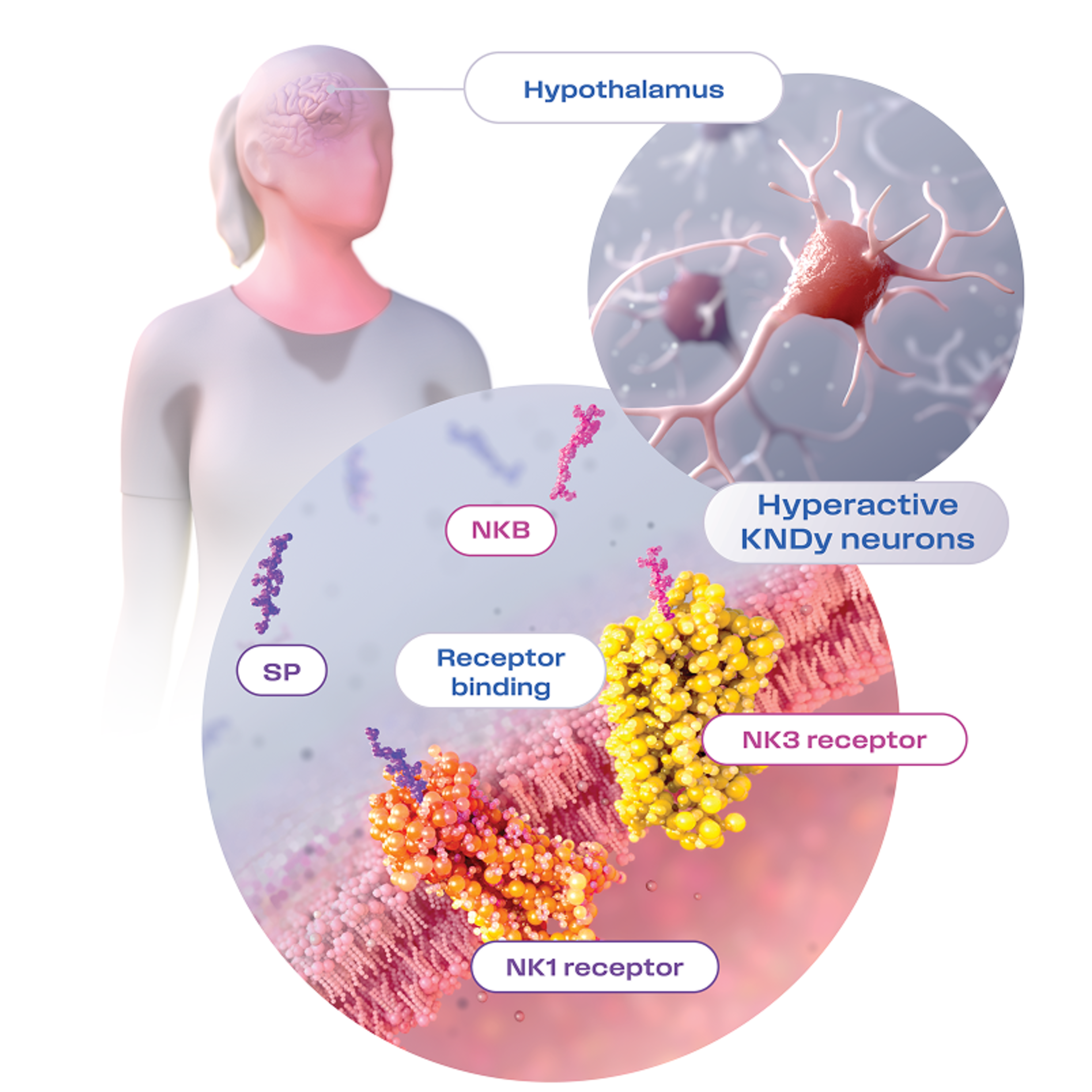
Kisspeptin/neurokinin B/dynorphin (KNDy) neurons located in the hypothalamus are thought to play a key role in thermoregulation.2-5 These neurons have NK1 and NK3 receptors.1
During menopause, KNDy neurons can become hyperactive, which is associated with overexpression of Substance P (SP) and Neurokinin B (NKB).4,6
NKB is known to be involved in the initiation of hot flashes via NK3 receptors on thermoregulatory KNDy neuronal pathways7,8
Scientific data indicates that SP, via NK1 receptors, is thought to amplify KNDy neuronal activity9-12
Overexpression during menopause
KNDy neuron hyperactivity is associated with overexpression of SP and NKB during menopause.4,6
How LYNKUET Works1
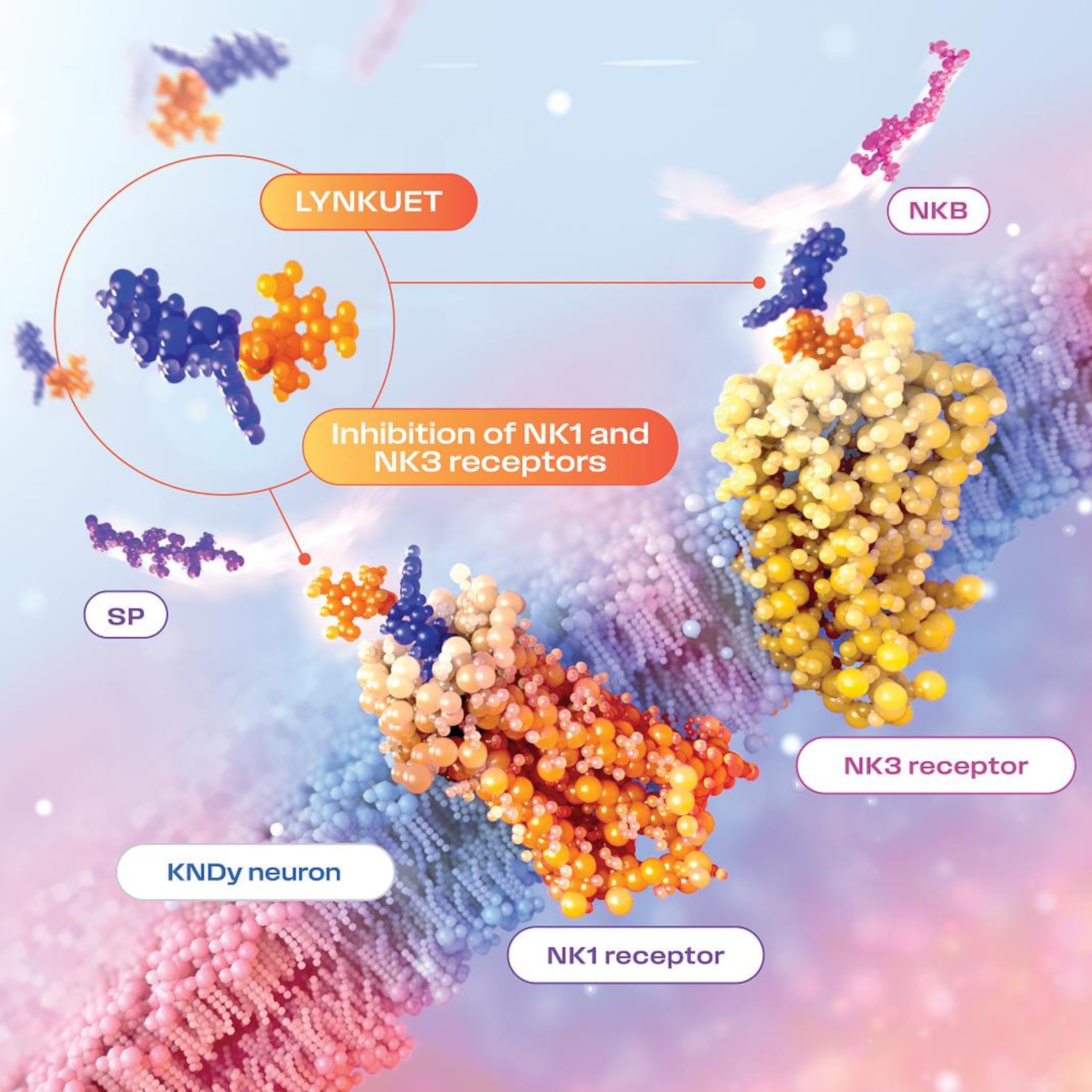
LYNKUET is an NK1 and NK3 receptor antagonist
Inhibition of SP and NKB through antagonism (blocking) of NK1 and NK3 receptor signaling on KNDy neurons can modulate neuronal activity in thermoregulation associated with hot flashes.
LYNKUET has higher affinity for human NK1 receptors and NK3 receptors than for human NK2 receptors.*
*pKi values: NK1 receptors, 8.7-10.2; NK3 receptors, 8.0-8.8; NK2 receptors, approximately 6.0.

Want to request samples?